

Freio de pressão CNC para carcaça do chassi: CNC vs NC – Key Differences
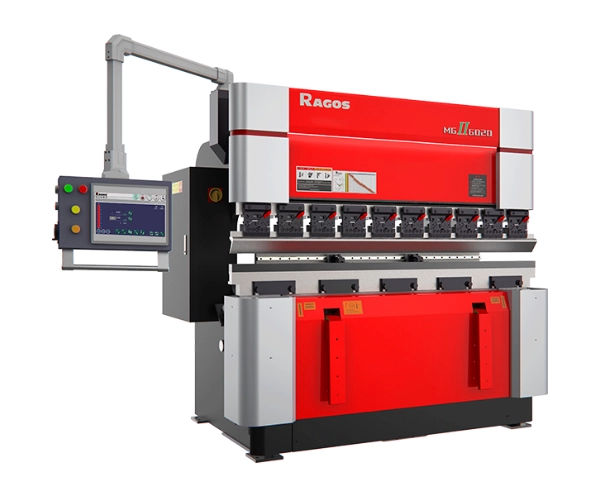
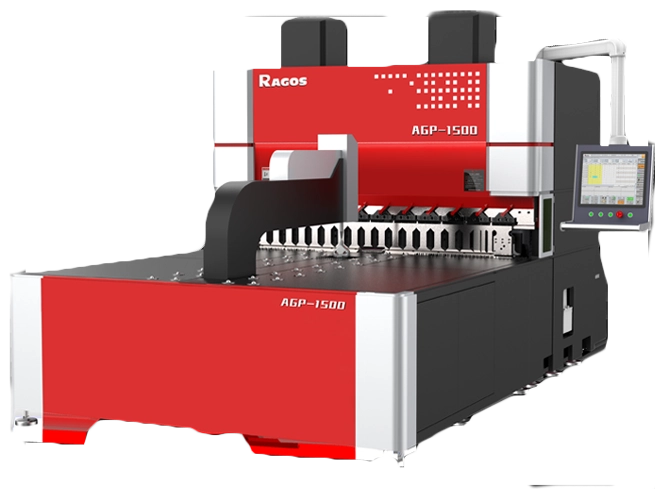
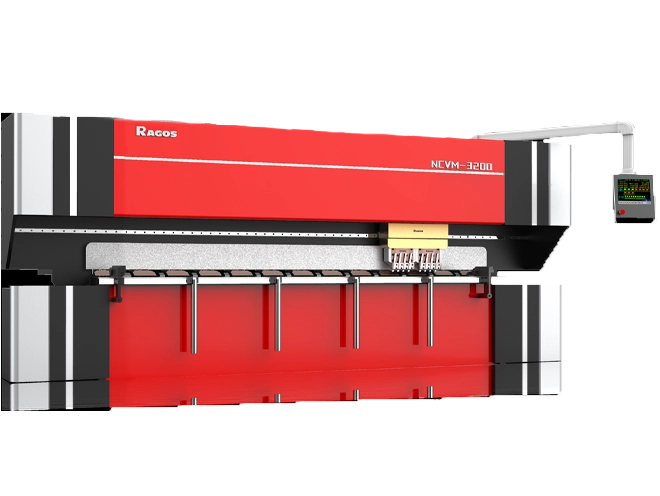
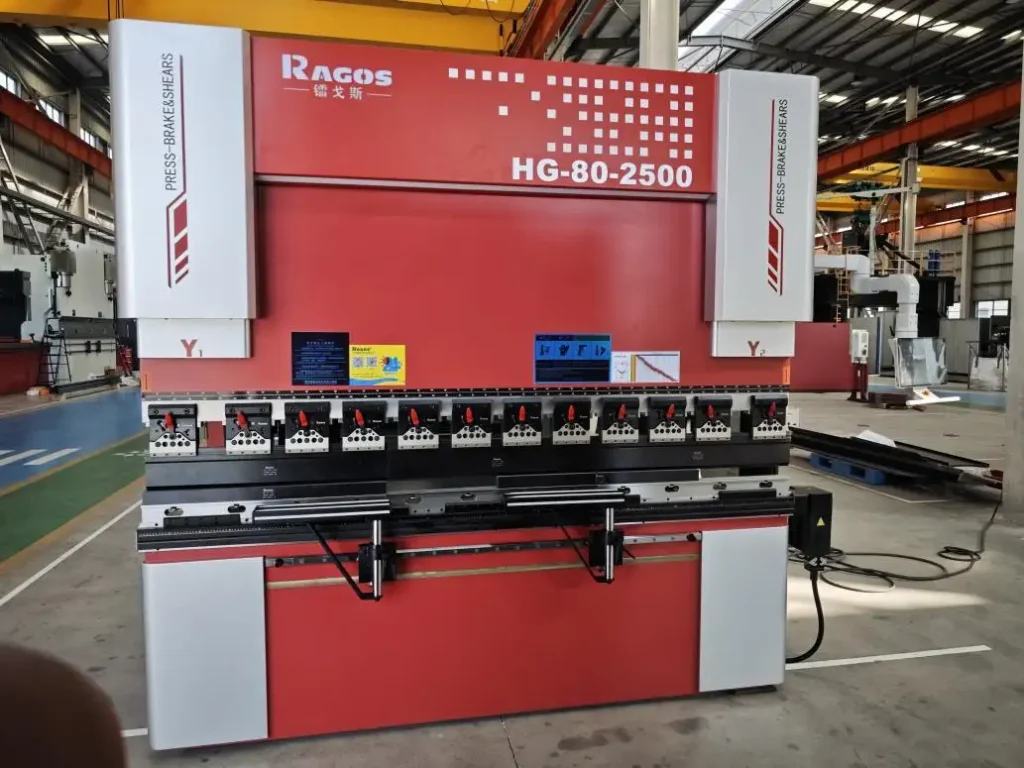
Investing in a CNC Press Brake for Chassis Housing is a game changer for manufacturers who want to produce precise and repeatable bends on heavy-duty enclosures. While analyzing the difference between CNC and NC press brakes, looking into their structural and performance aspects will help determine which machine is appropriate for your workshop. Through this guide, you will have a trusted resource to detail the fundamental differences and help you select the most appropriate solution for efficient bending of chassis housing components.
Visão geral
There is often confusion among purchasers differentiating between the CNC and NC press brakes. While both press brakes are utilized in the bending of sheet metal, their principles of operation, Controle, and field of application differ. De modo geral:
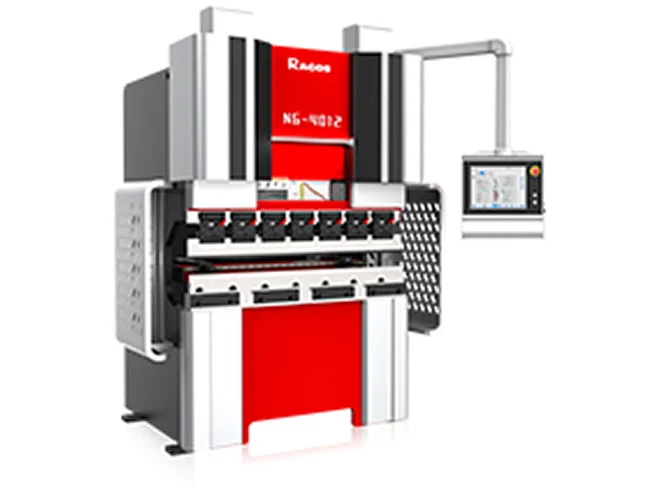
• NC press brake → Torsion-bar type (mechanical synchronization)
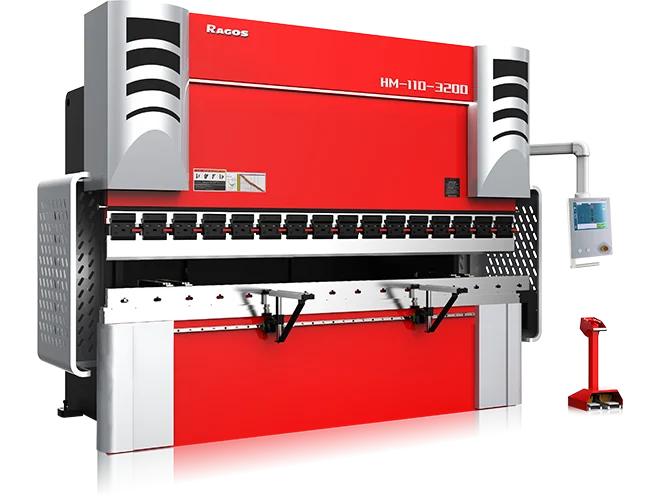
• CNC press brake → Electro-hydraulic type (servo-controlled synchronization)
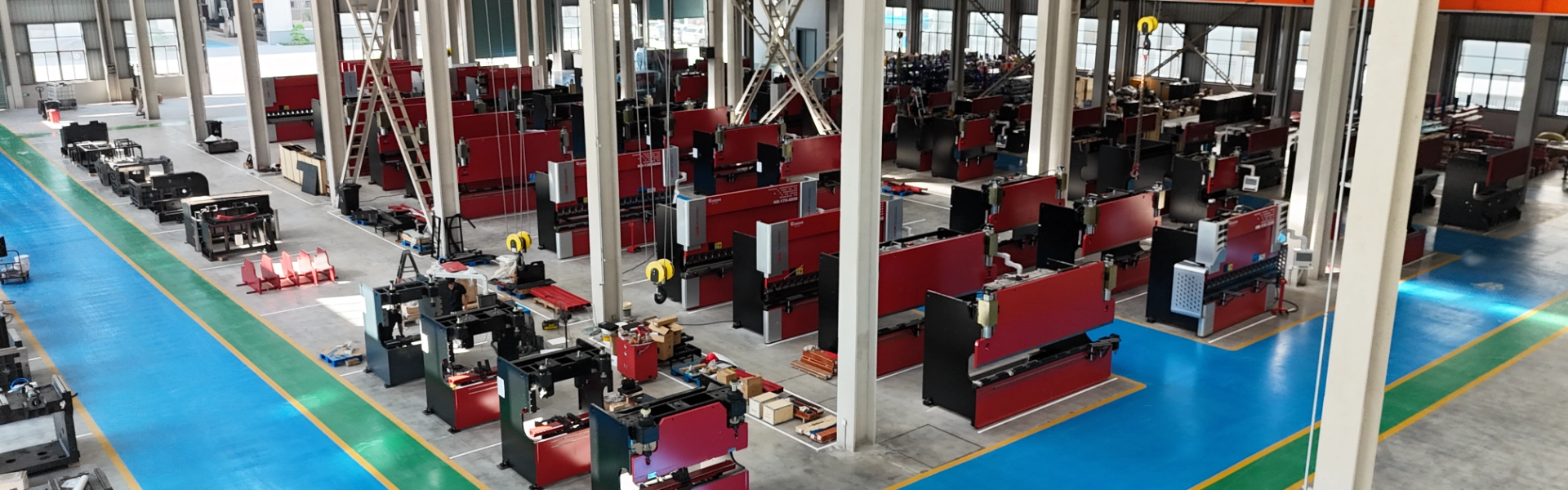
Na JS RAGOS, we manufacture both press brakes, but for the production of chassis housings with a high degree of accuracy, the CNC press brake is superior in terms of consistency and speed. The differences will now be explained.
1. Structural Differences
The fundamental design philosophy sets these two machines apart.
• NC press brake – Uses a torsion shaft that mechanically links both sides of the ram. This forces the ram to move up and down synchronously via a compulsive mechanical method. The ram parallelism cannot self-check or self-adjust.
• CNC press brake – Equipped with two linear encoders (one on each side) and a CNC controller. The controller constantly receives feedback from the encoders. If any synchronization error occurs, the controller sends a signal to proportional valves to correct the ram position in real time – a closed-loop control system.
JS RAGOS recommends the CNC structure for chassis housing bends that demand consistent angles across long workpieces.
2. Exatidão
Bending accuracy directly affects how well chassis housing parts fit together.
• NC press brake – Synchronization is purely mechanical. No real-time error feedback, no self-correction. Long-term partial loads can deform the torsion bar, reducing accuracy over time.
• CNC press brake - The closed-loop system (controller + proportional valves + linear encoders) continuously monitors and fine-tunes the parallelism of the ram. This yields much higher bending precision, especially for complex chassis profiles.
| Aspecto | Freio de Prensa NC | Prensa dobradeira CNC |
| Precisão do ângulo de flexão | ≤30′ | ≤18′ |
3. Working Speed
Productivity matters when you run batch production for chassis housing.
• NC press brake – Uses 6:1 or 8:1 cylinders. Ram down speed ≈ 80 mm/s; backgauge speed ≈ 100 mm/s.
• CNC press brake – Uses 13:1 or 15:1 cylinders. Ram down speed up to 200 mm/s, with smooth speed transition. Backgauge speed up to 400 mm/s, dramatically improving cycle times.
For JS RAGOS customers producing large quantities of chassis housings, the CNC press brake cuts bending time by more than half.
4. Mechanical Rigidity & Partial Load Capability
Chassis housing often requires asymmetric bending (Por exemplo,, one side longer than the other).
• NC press brake – Cannot handle sustained partial loads. The torsion bar will deform, leading to permanent inaccuracy.
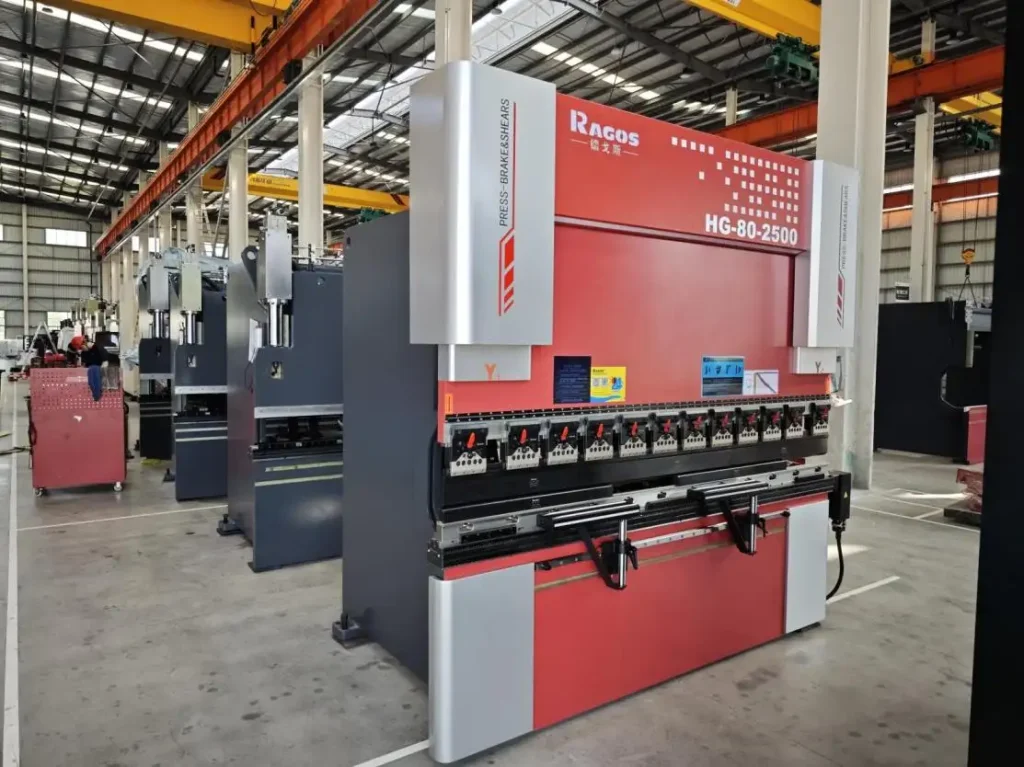
• CNC press brake – Y1 and Y2 axes work independently. Perfect for partial-load bending without mechanical stress.
JS RAGOS engineers always ask about your typical workpiece profile – if off-center bending is common, a CNC model is non-negotiable.
5. Sistema de coroamento
The crowning system compensates for deflection of the worktable, ensuring a uniform bend angle along the entire length.
• NC press brake – Most models come without crowning as standard. Operators have to manually modify the angle using test bends resulting in a process that is inefficient, time-consuming, and has a lack of precision. Some NC units have a manual crowning system as an option, but CNC systems are fully automated and do a better job.
• For a CNC press brake, the crowning system is incorporated and fully automated by the CNC controller. The controller has the ability to do an automatic adjustment of the crowning system based on the bending parameters. This is critical for long chassis housing panels to ensure the bends are straight and uniform.
6. CNC Axis Capability
As the number of axes increases, the bending possibilities become more complex.
• NC press brakes have the ability to control only the X (backgauge forward/back) and Y (depth of the ram) Eixos.
• On the contrary, the CNC press brake can control a minimum of 3+1 axes (X, Y1, Y2, Mais coroações) and possibly up to 8+1 axes. This feature is important for intricate chassis geometries that contain many flanges and complex angular relationships.
For complex and of high-demand nature projects, JS RAGOS will give you a fully customized alternative for their CNC axis offerings.
7. Configurações Opcionais
Both machine types can be upgraded, but the CNC press brake supports advanced automation.
| Recurso Opcional | Freio de Prensa NC | Prensa dobradeira CNC |
| Grampo rápido mecânico | ✓ | ✓ |
| Coroação manual | ✓ (Opcional) | ✓ (plus auto crowning) |
| Ball screw & linear guide | ✓ | ✓ |
| Resfriador de óleo | ✓ | ✓ |
| Cortina de luz | ✓ | ✓ |
| Grampo hidráulico | – | ✓ |
| Grampo de dupla face TYOKKO/AMADA | – | ✓ |
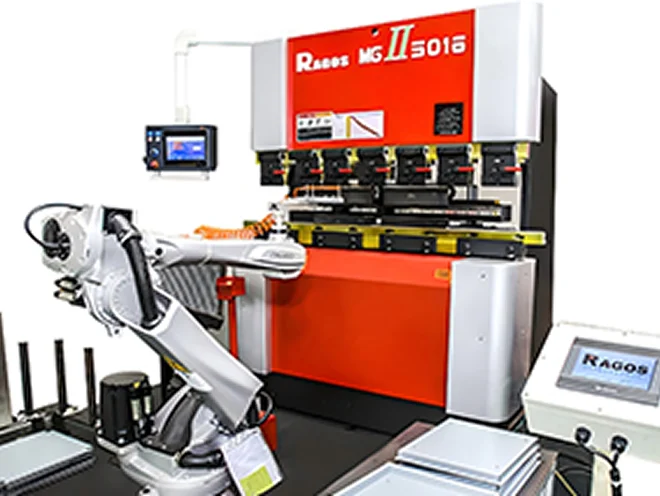
| Interface do braço robótico | – | ✓ |
| Acompanhador de folha | – | ✓ |
| Proteção a laser | – | ✓ |
| Medição de ângulo a laser | – | ✓ |
| Unidade de servobomba | – | ✓ |
For high-volume chassis housing manufacturing, JS RAGOS strongly advises CNC press brakes with robotic integration and laser angle measurement to achieve zero-defect production.
8. Programação & Operation
User experience and programming flexibility are worlds apart.
• NC press brake – Operators manually input cylinder stroke and backgauge position. No graphical interface, no automatic angle calculation.
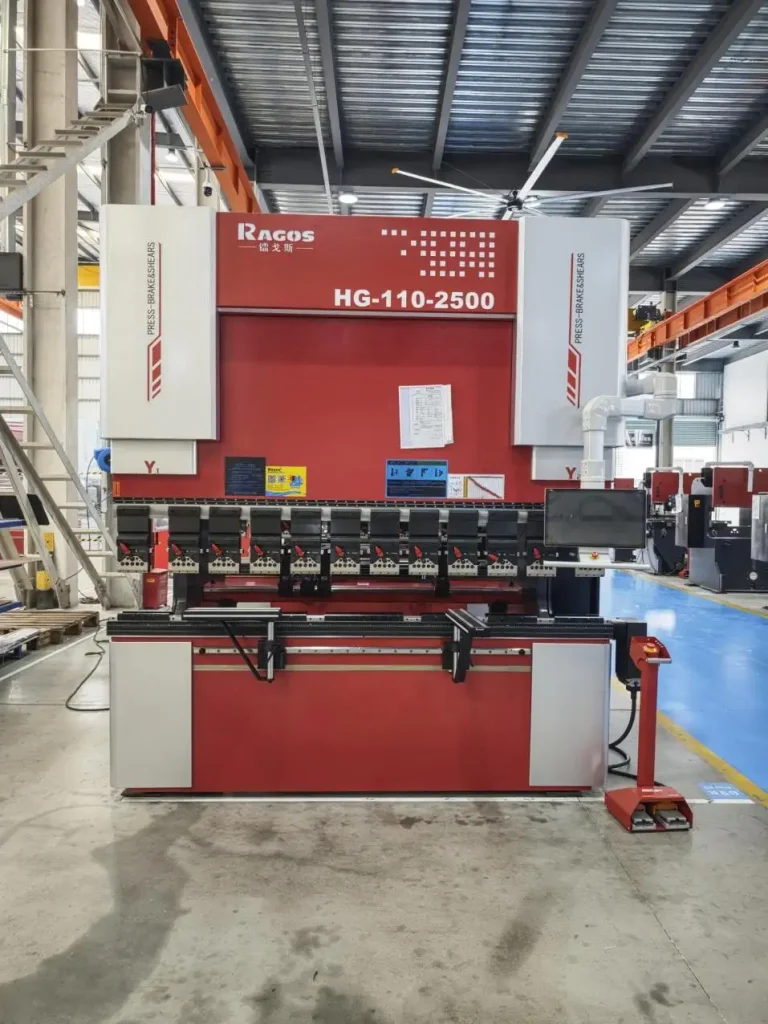
• CNC press brake – Supports data or graphical programming (Por exemplo,, DA-58T, DA-66T, DA-69T controllers). The system calculates:
- Comprimento de desdobramento a partir das dimensões internas/externas
- Required bending angle based on tooling angle, opening, Raio, and sheet thickness
- Automatic interference checking (punch/die vs. machine outline)
- Bending sequence suggestions (modifiable manually)
If the programmed angle differs from the actual result, the CNC controller can automatically correct the angle after the user inputs the error value. This feature alone saves hours of setup time for complex chassis housing parts.
9. Price Comparison (JS RAGOS Insight)
Cost is always a factor. Here is the general pricing relationship from JS RAGOS's production data:
| Capacidade da máquina | Relação de preços CNC vs NC |
| ≤ 200 toneladas | CNC é mais do que 2x NC |
| > 200 tons | CNC is less than 2x NC (the gap narrows) |
Recommendation from JS RAGOS:
• For lower tonnage (≤200t) and simple, symmetric bends, an NC press brake can be economical.
• For higher tonnage (>200t) or any application requiring precision, velocidade, and automation – especially for chassis housing – the CNC press brake delivers better long-term value and lower per-part cost.
Conclusão: CNC vs NC Press Brake at a Glance
| Não. | Característica | Prensa dobradeira CNC | Freio de Prensa NC |
| 1 | Sincronização da RAM | Closed-loop with encoders, self-correcting | Mechanical torsion bar, no self-correction |
| 2 | Cálculo do ângulo de flexão | Automatic via tooling & Entrada de material | Apenas manual |
| 3 | Realimentação da profundidade de flexão | Codificadores lineares que se enquadram para deformação garganta | Nenhum |
| 4 | Coroação em bancada de trabalho | Coroação automática controlada por CNC | Nenhum ou manual opcional |
| 5 | Correção angular | Entrada automática após erro | Não disponível |
| 6 | Posicionamento do bitolinha de retorno | Cálculo automático por altura de flexão | Manual input (only X axis forward/back) |
| 7 | Método de programação | Data/graphical, easy editing | Derrame & position only |
| 8 | Cálculo do comprimento de desdobramento | Sim (graphical programming) | Não |
| 9 | Interference check & bending sequence | Substituição manual automática | Não |
| 10 | Velocidade de redução do impacto | 160–180 mm/s (up to 200 mm/s) | 80–100 mm/s |
| 12 | Precisão do ângulo de flexão | ≤18′ | ≤30′ |
| 13 | Eixos de bitola de retorno | Multiple CNC axes (3+1 to 8+1) | Apenas eixo X |
Palavras finais de JS RAGOS
Choosing between a CNC and an NC press brake for chassis housing production comes down to your accuracy requirements, Tamanho do lote, Complexidade, and budget. Para mistura alta, high-precision chassis components, the CNC press brake is the clear winner. O JS RAGOS projeta e constrói ambos os sistemas, so we provide unbiased advice – and for most chassis housing applications, we recommend investing in a CNC electro-hydraulic model.
If you are unsure which configuration fits your specific chassis housing parts, contact JS RAGOS for a free bending analysis and machine recommendation.