

Melhores Configurações de Freio de Pressão para Dobrar Chapas de Alumínio (Configuração inicial)
Dobrar alumínio em um freio de pressão parece menos trabalho industrial pesado e mais engenharia de precisão. Enquanto o alumínio é fisicamente mais fácil de mover do que o aço, É significativamente mais exigente quando se trata de estética de superfície e integridade estrutural. Um parâmetro errado pode causar um lote de partes rachadas ou um acabamento superficial que parece ter sido arrastado por uma estrada de cascalho.
Dominar o alumínio exige que você mude sua mentalidade de "quanta força posso aplicar" para "quão precisamente posso controlar a deformação." Para alcançar resultados de alta qualidade, Sua configuração deve levar em conta o comportamento único de rendimento do material, Alta recuperação elástica, e sensibilidade extrema à pressão superficial.
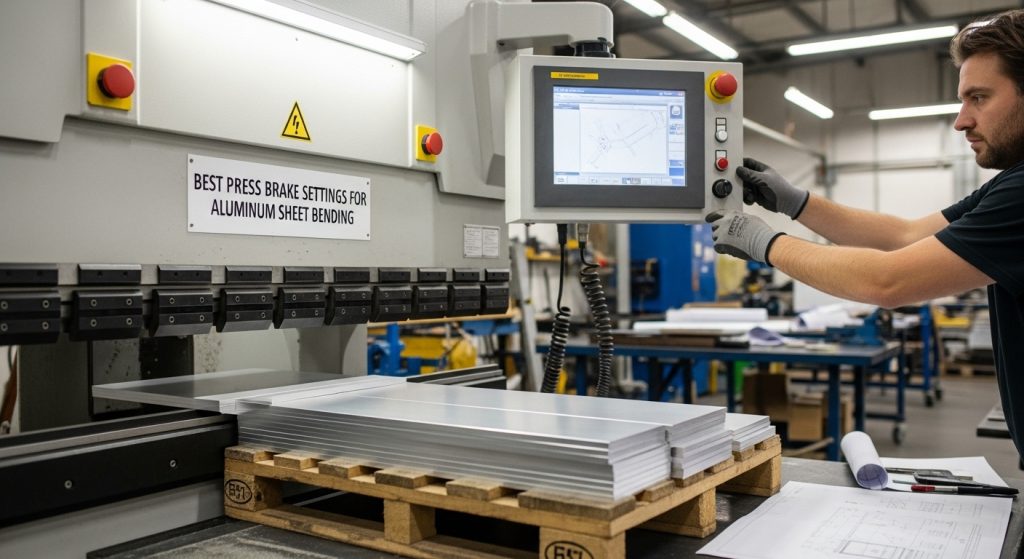
O que é um freio de pressão?
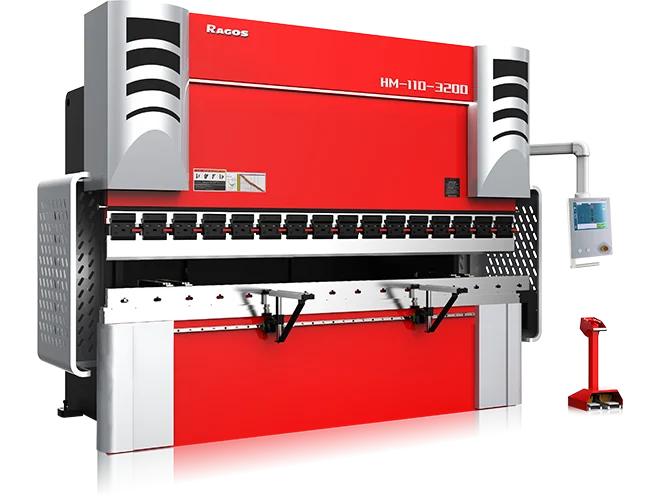
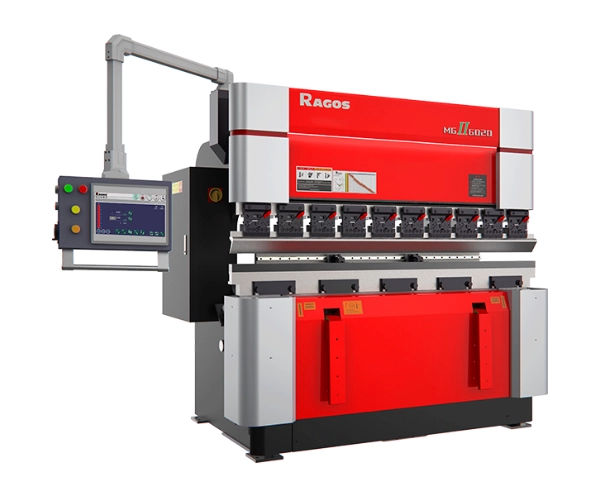
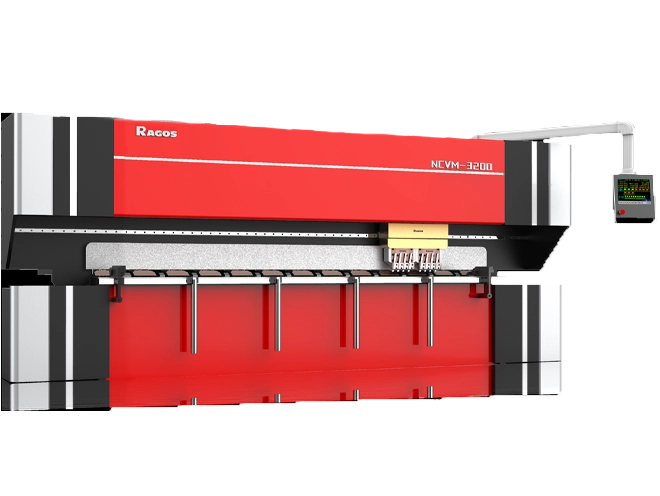
A Freio de pressão é uma peça crítica de maquinaria industrial projetada para dobrar chapas e materiais de chapas, mais comumente chapa metálica. Isso é feito ao prender a peça entre um punção e um matriz correspondentes. Embora o conceito pareça simples — aplicar força em um pedaço de metal para mudar sua forma — o freio de pressão moderno é uma maravilha da engenharia de precisão.
Em 2026, A tecnologia se dividiu em dois caminhos principais: Hidráulico e Elétrico. Freios de pressão hidráulicos continuam sendo a escolha para aplicações de alta tonelagem, como aço estrutural, enquanto os freios de pressão elétricos assumiram o lugar das de alta velocidade, mercado de precisão para materiais mais finos como alumínio. O "Freio" no nome não se refere a parar; Deriva de um termo arcaico que significa "Intervalo" ou "Curva" As fibras do material.
Os Componentes Centrais da Máquina
Para dominar suas configurações, Você precisa entender os quatro pilares do freio de pressão:
- O Carneiro: A parte superior móvel que segura o punção. Em modelos CNC, A posição do ram é controlada dentro de micrômetros.
- A Cama: A parte inferior estacionária onde o dado está posicionado.
- As Ferramentas: Isso consiste em Punch (A ferramenta superior) e o O (a ferramenta inferior em formato de V). A relação entre esses dois determina o ângulo e o raio da flexão.
- O Backgauge: Um sistema automatizado de posicionamento que garante que a chapa seja colocada exatamente na profundidade necessária para a curvatura.
Por que o alumínio exige configurações diferentes do freio de pressão do que o aço
Alumínio não é só "aço macio." Possui um limiar de deformação plástica mais baixo e um acabamento superficial muito mais sensível. Se você usar parâmetros padrão de aço, Você provavelmente encontrará esses problemas específicos:
- Distorção por Excesso de Tonelagem: Porque o alumínio cede facilmente, Força excessiva não melhora a precisão — ela faz o material se curvar ou "Pia" na linha de curva.
- Riscos na superfície: Alumínio é um "Galling" Metal. Superfícies de ferramentas ásperas transferem fisicamente marcas para a chapa muito mais rápido do que em aço carbono.
- Sensibilidade aos grãos: O alumínio tem uma estrutura de grão muito pronunciada. Dobrar sem ajustar a direção dos grãos frequentemente leva a microfraturas.
Por que o alumínio exige configurações diferentes do freio de pressão do que o do aço?
O alumínio se comporta de forma diferente devido à sua baixa resistência ao escoamento e alta sensibilidade à superfície. Diferente do aço macio, que pode suportar alta pressão localizada sem marcação significativa, A baixa dureza do alumínio significa que toda imperfeição na sua ferramenta ou cada pico na velocidade do RAM é registrado na superfície do material.
Outro fator crítico é o Recuperação elástica do desvio de ângulo do alumínio. O alumínio geralmente apresenta mais recuo de mola do que o aço macio porque sua relação entre resistência ao escoamento e módulo elástico é maior. Se as configurações da sua máquina não considerarem isso "Deriva," Seus ângulos finais nunca vão atender às especificações de impressão.
Quanta tonelagem deve ser usada ao dobrar chapa de alumínio?
Definir o tonelagem correto é um exercício de equilíbrio. Você quer força suficiente para criar uma deformação plástica limpa, mas você deve ficar abaixo do Limiar de distorção superficial. Excesso de tonelagem no alumínio não desgasta apenas suas ferramentas; Ela esmaga fisicamente o material, Afinar a linha de curvatura e enfraquecer a peça.
Como regra geral, Alumínio requer aproximadamente 40% a 50% da força Usado para aço macio. Por exemplo, Se você estiver dobrando uma folha de 3mm:
- Aço macio: ~25 toneladas por metro.
- Alumínio: ~12 a 15 toneladas por metro.
Usando um Formação de baixa força A abordagem impede o punção de "Enterro" ela mesma muito fundo no metal, o que mantém a espessura consistente e evita a flambagem por compressão frequentemente vista em chapas finas de alumínio.
Qual é a melhor velocidade de aproximação e velocidade de flexão para alumínio?
Na fabricação de alumínio, Velocidade mata qualidade. Altas velocidades de aproximação criam um "choque" Quando o punção entra em contato com o material pela primeira vez, levando a Tensão de impacto por contato com a ferramenta. Esse impacto pode deixar uma linha horizontal visível (Testemunha Mark) na parte antes mesmo do início da curva.
Estágios de Velocidade Recomendados:
- Velocidade de Aproximação: Desacelere a RAM antes que ela chegue ao "Ponto Mudo" (O momento antes do contato). Isso garante um toque suave.
- Velocidade de Pressionamento: Mantenha a velocidade de curva consistente. Aceleração repentina do ram causa transferência de vibração, o que pode levar a "Marcas de conversa" no raio da curva.
- Retorno do Golpe: Use uma liberação controlada. Liberar a pressão muito rápido pode fazer a peça "pular," potencialmente arranhando o material contra os ombros do die enquanto ele recua.
Por que a permanência sob pressão é importante para a estabilidade do ângulo de flexão do alumínio?
Moléculas de alumínio precisam de tempo para "Relaxe" para sua nova forma. Usando um Temporização de relaxamento de tensão material (Fase de permanência) na parte inferior do traço, Você permite que a deformação plástica se estabilize.
Sem fase de permanência, o Atraso na recuperação elástica é imprevisível. Uma breve estada (geralmente de 0,2 a 0,5 segundos) permite que o material tome um "Conjunto," Melhorando significativamente a repetibilidade dos ângulos de flexão ao longo de uma grande produção. No entanto, evitar sobremorar, pois isso pode levar a compressão desnecessária da superfície em folhas muito finas.
Como a seleção do chip V afeta a qualidade e a precisão da superfície do alumínio?
Sua escolha da largura do chip em V é a principal variável para proteção do acabamento superficial. Um dado V estreito aumenta o Pressão no ombro do die, que é a principal causa da marcação por transferência superficial.
| Espessura da Folha | Abertura em V recomendada | Resultado |
| 1mm - 2mm | 10x - 12x Espessura | Marcação reduzida, raio maior |
| 3mm - 5mm | 8x - 10x Espessura | Balanço padrão |
| 6mm | 10x - 12x Espessura | Mais seguro para placas pesadas, previne rachaduras |
Alargando o dado V, Você distribui a força de formação em uma área maior. Isso reduz a pressão nos pontos de contato e resulta em um produto mais limpo, Chegada sem marcas.
Qual raio de perfuração funciona melhor para dobrar chapas de alumínio?
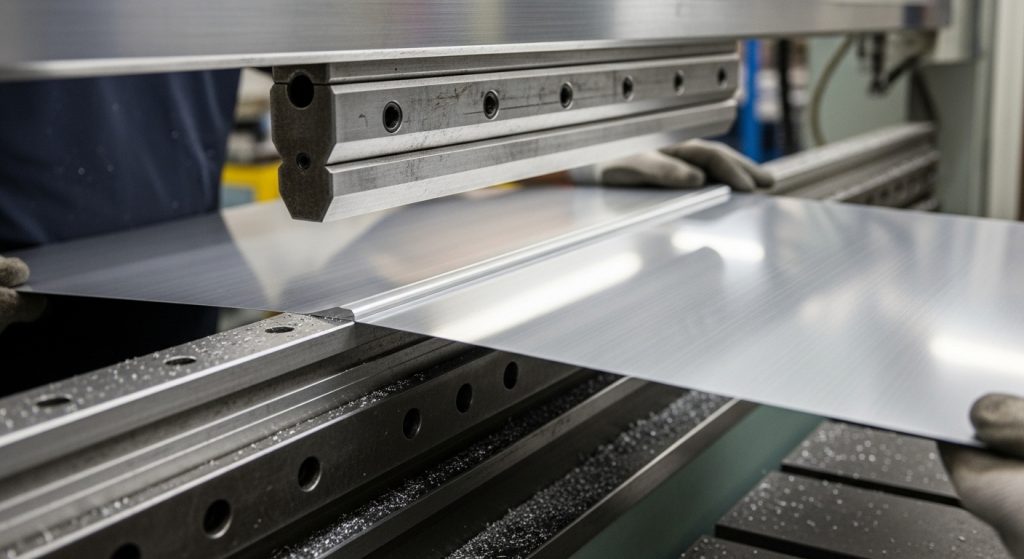
Usando um sustenido "faca" Punch no alumínio é receita para desastre. Alumínio exige uma maior Raio interno para evitar tensão à tração nas fibras externas da curvatura. Se a ponta do punção estiver muito afiada, Vai funcionar como uma lâmina, criando um ponto de concentração de tensão que leva a trincas.
Para deslocar o Estabilização por compressão no eixo neutro, Sempre use um punção com raio pelo menos igual à espessura do material ($R ge T$). Para ligas mais duras como 6061-T6, Pode ser necessário um raio com 2 ou 3 vezes a espessura para evitar fraturas.
Como freios de pressão CNC melhoram a consistência da flexão do alumínio?
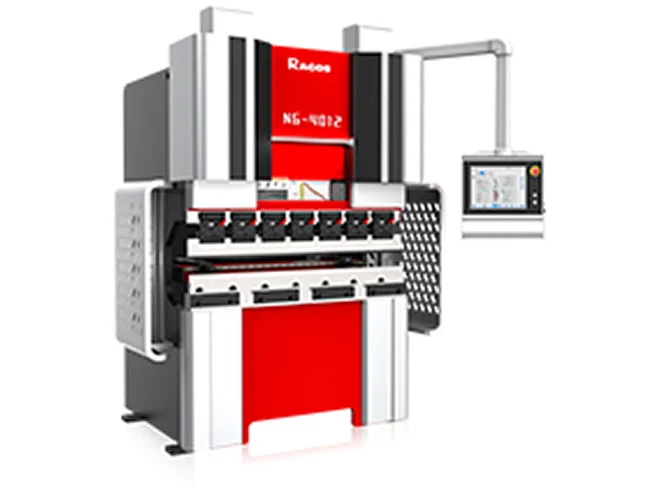
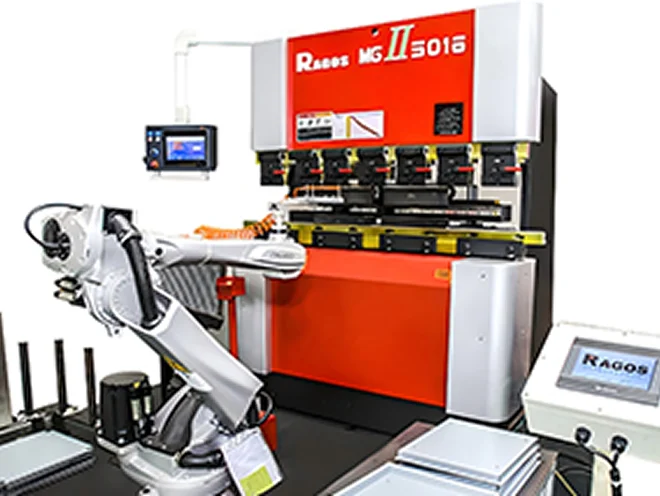
Moderno Freios de pressão CNC são essenciais para alumínio porque utilizam um Sistema de Aprendizagem de Parâmetros de Formação Digital. Como a dureza do alumínio pode variar entre os lotes, um sistema CNC pode compensar essas flutuações em tempo real.
- Realimentação em malha fechada: Máquinas avançadas medem o ângulo real durante a curvatura e ajustam a profundidade do ram para atingir o grau exato, Independentemente do material com recuo.
- Memória do Programa: Depois de encontrar a velocidade e as configurações de permanência perfeitas para um tipo específico de alumínio, o CNC armazena eles, Garantir Precisão de repetição toda vez que você faz esse trabalho.
- Posicionamento do servo: Osciladores de alta resolução evitam que a folha fina escorregue, o que é fundamental para a estabilidade de flanges pequenas.
Quais são os erros mais comuns ao montar trabalhos de dobra de alumínio?
Mesmo operadores experientes podem cair em armadilhas ao trocar de aço para alumínio. Evite esses erros comuns de configuração de processos:
- Uso de Parâmetros de Aço: Nunca presuma "Configurações de aço" vai funcionar. O alumínio precisa de menos tonelagem e velocidades mais lentas.
- Soco Muito Forte: Uma ponta afiada vai rachar o raio externo. Use um punção radiada.
- Negligenciando a direção do grão: A flexão paralela ao veio de laminação é uma das principais causas de Instabilidade por deformação e fraturas. Sempre dobre o sentido contrário ao veio quando possível.
- Ferramentas Sujas: Alumínio "captador" Os ombros do cunho funcionam como lixa. Mantenha suas ferramentas polidas e limpas.
Comparações e Lições de Configuração Estratégica
Para quem gerencia linhas de produção diversas, Entender como a montagem do alumínio difere de outros materiais é fundamental para a eficiência no chão de fábrica.
- Alumínio vs. Aço: Enquanto Freio de prensa de chapa de aço Os cenários focam no gerenciamento de cargas elevadas, As configurações de alumínio focam no gerenciamento da integridade e ductilidade da superfície.
- Alumínio vs. Aço inox: Freio de pressão de aço inoxidável O trabalho exige força muito maior e leva em conta o recuo extremo, enquanto alumínio exige delicadeza e prevenção de rachaduras.
- Painéis Finos de HVAC: Lições de Freio de pressão HVAC Fluxos de trabalho mostram que evitar distorções de superfície em flanges longas requer coroação precisa e pressão leve.
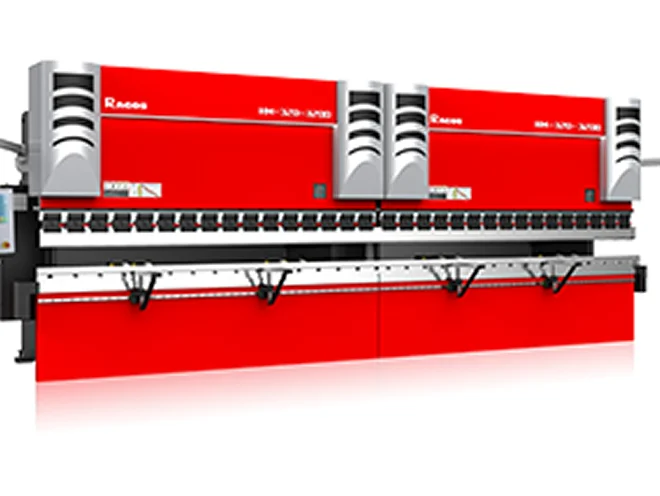
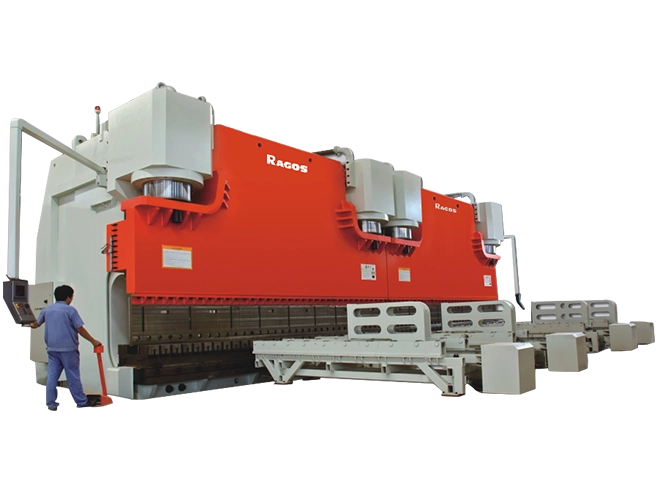
- Flexão de painéis longos: Ao dobrar painéis arquitetônicos de alumínio com mais de 4 metros, usando um Freio de pressão tandem garante o equilíbrio de distribuição de carga e evita torções na chapa longa.
Final Thought
O sucesso na curvatura de alumínio é uma transição da força para a finesse. Diminuindo sua abordagem, alargando seus V-dies, e usando um raio de perfuração generoso, Você pode produzir peças de alumínio tão resistentes quanto bonitas. Quando você respeita a curva de deformação única do material, Sua taxa de sucata desaparece e sua estabilidade de produção atinge novos patamares.