


Flexão de ar em um freio de pressão: Processo, Ferramental, e Precisão
Autor: Mark Hanks
Introdução
Air bending is one of the most common sheet-metal forming methods used on CNC press brakes. Different angles can be produced with the same suitable punch-and-die set by controlling the ram position and punch penetration depth.
This guide explains the V-die air-bending process, compares air bending with bottoming, and shows how material, ferramental, Retorno, and machine deflection affect the final bend angle.
O que é dobra de ar?
Dobra de ar, also called V-type free bending, is a three-point forming method. The sheet contacts the punch tip and the two shoulders of the V-die, while clearance remains between the sheet and the bottom of the die during the forming stroke.
The sheet is positioned over the lower V-die and the punch moves downward. The material first deforms elastically and then plastically as the programmed depth is reached.
When the punch retracts, elastic recovery opens the included bend angle slightly. This springback must be considered when setting the loaded angle and evaluating the finished part.
Geometria das ferramentas, punch depth, Espessura da folha, Propriedades do material, Direção do grão, and V-die opening all influence springback and final angle accuracy.
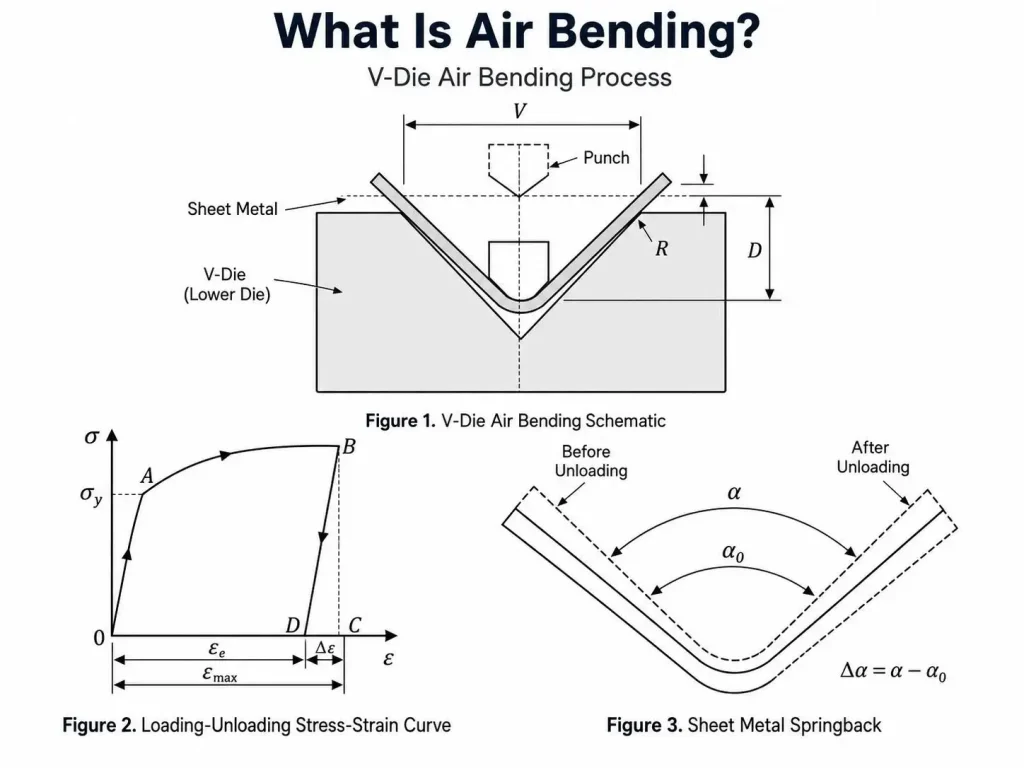
Figure 1: Dobra de ar, Material Deformation, e Springback
Three-Point Contact Principle
The upper punch exerts pressure while bending down in the center of the sheet metal.
Both sides of the V-shaped lower die offer support to the sheet.
Assim, the bending process can be explained in terms of three contact points as:
One upper punch contact point + two lower die support points.
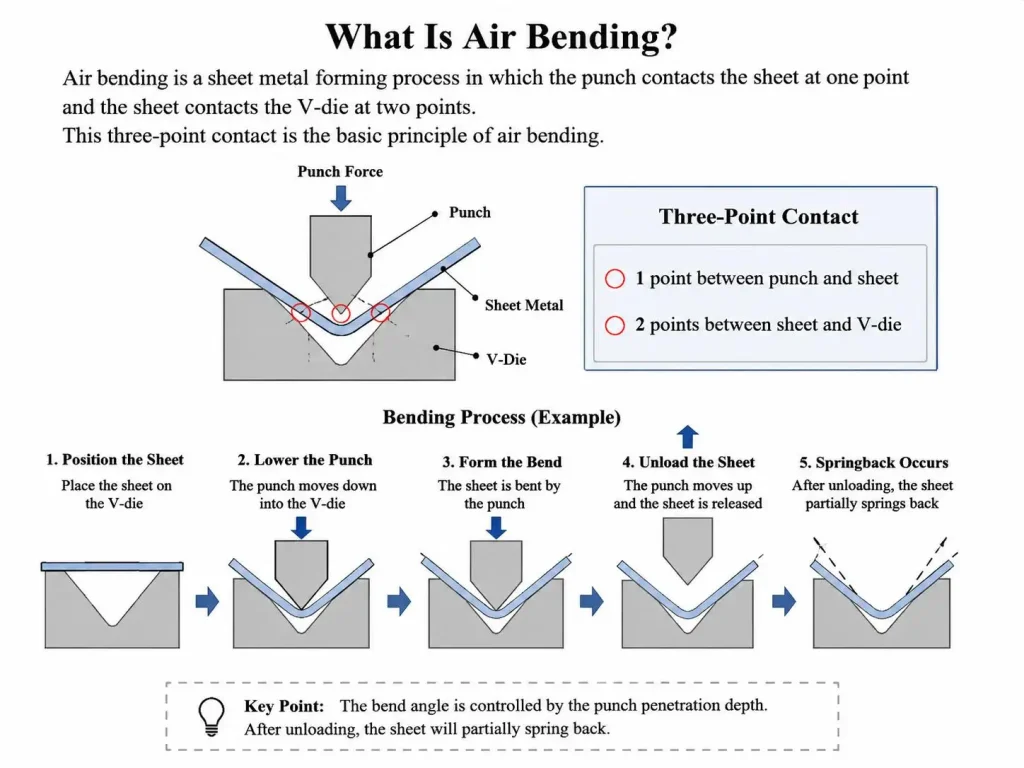
Figura 2: Three-Point Contact and the Air-Bending Process
ALT: Air bending principle and V-die bending process, with three contact points, punch movement, and springback
The upper punch moves down, and the sheet metal bends and begins to take on a V-shaped die profile.
The sheet does not need to contact the bottom of the V-die. The final unloaded angle is determined by the programmed punch depth together with tooling geometry, Comportamento material, and springback.
How Punch Penetration Controls the Bend Angle
Punch penetration is the main programmed variable used to control the loaded angle in air bending.
As the punch travels farther into the V opening, plastic deformation increases and the included angle becomes more acute.
D is the upper punch penetration. When the upper punch drops to the distance D, the bending loading is complete. The upper punch also moves back to its original position to complete the unloading of the bending.
This is a significant advantage of the air bending process.
With the same set of V-shaped tooling, different bending angles can be achieved simply by adjusting the upper punch penetration depth, without requiring a separate tool set for each angle. Research on free bending also confirms that different bending angles can be obtained by adjusting the downward stroke of the upper punch.
No entanto, the bending angle achieved during punch loading does not always equal the final formed angle.
After unloading, the elastic portion of the deformation recovers and the included angle opens. The program therefore needs a controlled springback correction rather than relying on loaded geometry alone.
How Does V-Die Air Bending Work?
The process can be understood as positioning, Carregamento, Formando, unloading, and checking springback.
The sheet metal is placed on a V-shaped lower die, prior to the bending process beginning. The upper punch descends markedly, forcing the sheet to enter the V-shaped die. Simultaneously, the upper punch affects both elastic and plastic deformation to the sheet, gradually forming the desired bend shape.
After the programmed depth is reached, the punch retracts and the load is removed. Elastic recovery then opens the included angle, so the unloaded part must be measured before any correction is saved.
Passo 1: Position the Sheet Metal
Passo 2: Lower the Punch into the V-Die
Passo 3: Form the Desired Bend Angle
Passo 4: Unload the Sheet
Passo 5: Account for Springback
Dobra de ar vs. Bottom: What Is the Difference?
The main difference between bottoming and air bending is the mechanism of forming.
Both methods use a punch and lower die, but their contact conditions differ. Air bending retains clearance beneath the sheet, while bottoming brings the sheet into much fuller contact with matched tooling.
Air bending changes bending angle according to the penetration depth of the upper punch in the air bending method. The upper punch only needs to contact the sheet to make it touch the surface of the lower die.
In bottoming, the punch drives the sheet into much fuller contact with the tooling profile. The finished angle is therefore tied more closely to the matched punch and die geometry than it is in air bending.
Air bending offers greater angle flexibility and normally requires less force, but springback is more visible. Bottoming uses higher force and matched tooling to reduce springback. Coining is a separate, still higher-pressure process and should not be treated as another name for bottoming.
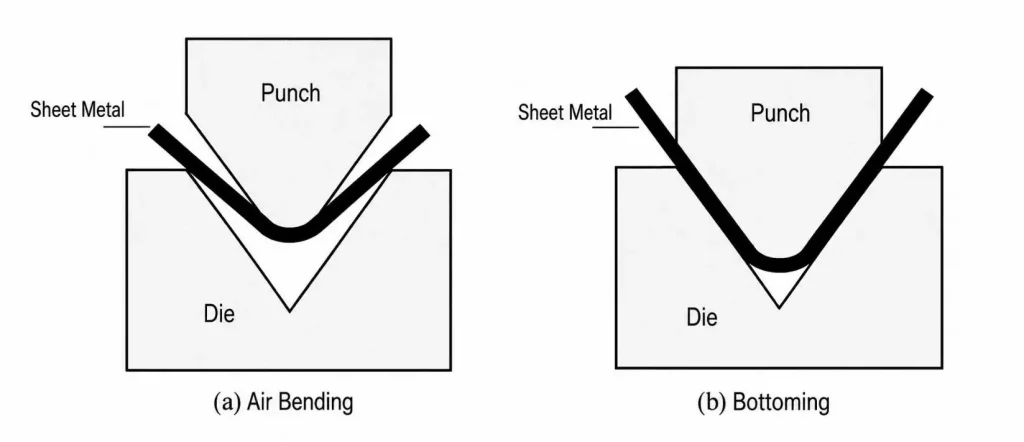
Figura 3: Dobra de ar vs. Bottoming in Sheet Metal Bending
Contact Between the Sheet and Die
The primary distinction between air bending and bottoming occurs in the contact condition of the sheet metal versus the tooling.
Na dobra de ar, the punch drives the sheet into the V opening without contacting the lower die, and the sheet retains clearance above the bottom of the die.
The sheet metal bends between the upper punch and the V-shaped lower die, thereby bending to a position that is not conformed to the entire lower die.
In bottoming, the upper punch continues its downward motion resulting in the sheet metal conforming to a greater degree to both tooling surfaces.
Portanto, the final shape in bottoming is more dependent on the geometry of the tooling. The forming angle is relatively fixed and mainly corresponds to the angle of the die.
Bending Force and Tonnage Requirements
Air bending typically requires lower bending force.
Because the sheet is supported at three points and is not forced into full tool contact, air bending normally requires less press brake tonnage than bottoming or coining.
The upper punch presses the sheet metal into the lower die during air bending, so not as much of the sheet metal contacts the lower tooling.
Bottoming brings the sheet into much fuller contact with the tooling, so it requires greater forming pressure.
The exact force difference depends on the material, Comprimento da curva, espessura, V opening, tool geometry, and the tooling supplier's definitions. Use o press brake tonnage and die-opening guide to establish a starting value, then verify it against the machine and tooling limits. Generic multipliers should not be used as machine settings.
Bend Angle Flexibility
Air bending provides higher angle flexibility.
When using the same set of upper and V-shaped lower tooling, different bending angles can be achieved by adjusting the penetration depth of the upper punch.
To summarize, multiple bending angles on manufactured workpieces don't obligate the use of multiple tools for the manufacturing process.
This is one of the strengths of air bending, along with other methods of bending, like multiple bending angle applications.
Bottoming offers less angle flexibility because the finished angle is tied more closely to the matched tool geometry.
In bottoming, the upper punch forces the sheet metal to take the desired shape and conform to the tooling, resulting in the final bending angle dependent on the die geometry.
Air bending implements multiple bending angles with a single tooling set, while in bottoming the forming angle is more fixed.
Springback and Bending Accuracy
Springback is the elastic recovery that occurs after the forming load is removed; it is not simply the difference between air bending and bottoming.
After air bending, the upper punch retracts and the applied load is removed.
Since the material undergoes some elastic deformation and some of it returns upon unloading, there is a change in the bending angle. This phenomenon is called springback.
When compared to bottoming, air bending results in more pronounced springback, resulting in greater challenge in controlling the final bending angle.
Por outro lado,, bottoming shows less springback since the sheet metal forms to the tooling surfaces.
Portanto, when using air bending for high-precision components, greater attention must be paid to springback compensation.
In practical bending operations, it is necessary not only to control the upper punch penetration depth but also to consider the elastic recovery of the material after unloading. Otherwise, the final bending angle may deviate from the target angle. Research studies also identify springback as one of the key factors affecting the angle accuracy of V-type free bending.
Tabela 1. Key Differences Between Air Bending and Bottoming
| Comparison | Dobra de ar | Bottom |
| Sheet-to-Die Contact | The sheet does not fully contact the die | The sheet contacts the die more fully |
| Bend Angle Control | Mainly controlled by punch penetration depth | Mainly limited by the tooling angle |
| Bending Force | Lower | Maior |
| Press Brake Tonnage Requirement | Lower | Maior |
| Bend Angle Flexibility | Maior | Lower |
| Retorno | More significant | Smaller |
What Is Springback in Air Bending?
Springback is an elastic-recovery phenomenon that occurs after the forming load is removed.
Quando a chapa metálica é dobrada, it undergoes both elastic and permanent deformations. Once the upper punch starts its downward motion, the sheet is subject to loading and starts to take the desired bending shape.
Once the bending process is complete, the upper punch moves in the upward direction, and thus the loading on the sheet is removed. The permanent deformation is fixed, while some of the elastic deformation returns.
The result of this phenomenon is that the sheet returns to its original state, or almost, causing the bending angle to essentially increase. This phenomenon is called springback.
Springback causes the actual bending angle to be different from the desired angle. Portanto, controlling springback is of high importance in air bending processes where high levels of precision are necessary.
Why Does Springback Occur?
When bending sheet metal, there are two types of deformations that occur: elastic and permanent.
Plastic deformation develops after the material exceeds its elastic range and remains after unloading.
Elastic deformation occurs as well during bending, but when the upper punch loses contact with the sheet, the deformation also largely reverts to its original condition.
After the upper punch loses contact with the sheet, the sheet does not fully hold the shape that was attained under the bending load. Em vez de, the sheet undergoes a large amount of shape recovery, causing springback to occur.
The process for measuring springback is as follows:
Loading → Elastic Deformation + Plastic Deformation → Unloading → Elastic Recovery → Springback
Springback is evaluated by comparing the angle under load with the angle measured after the punch retracts.
How Springback Affects the Final Bend Angle
Springback directly impacts the final bend angle.
When the upper punch is in contact at the bending depth, the sheet has already acquired a bending angle.
When the upper punch begins to move and the load is removed, there is an elastic recovery in the sheet. This leads to an opening of the angle slightly.
This means that:
The unloaded bend angle can differ from the angle observed at the programmed depth because elastic strain recovers.
Por exemplo, if the target included angle is 90 degrees, springback can leave the unloaded part at an angle greater than 90 degrees unless the loaded angle is made slightly more acute.
As you may have guessed, the greater the extent of the springback, the greater the difference is likely to be between the final angle and the desired target angle.
The accuracy of angles in air bending is not only dependent on the position of the upper punch but also the material's springback behavior after the load is taken off.
Why Springback Compensation Is Important
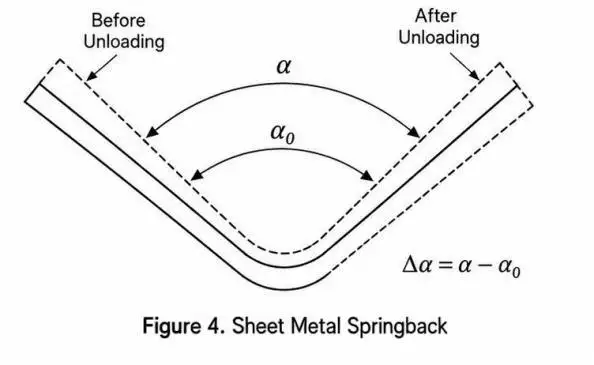
Figura 4. Sheet Metal Springback
If springback is neglected, the angle visible when the upper punch exerts pressure can be correct. No entanto, the final unloaded angle may still be different from the target angle.
Por isso, precise air bending requires appropriate compensation for springback.
A common correction is to increase punch penetration in controlled increments so the loaded included angle is slightly more acute. Measure the unloaded part after each correction and remain within machine and tool limits.
The accuracy of this technique depends on the estimation of the required maximum compensation.
If compensation isn't appropriate, the final angle will not hit the target angle.
Excessive compensation can make the unloaded included angle too acute, so corrections should be incremental.
A validated springback correction reduces repeated trial bends and the scrap caused by unacceptable angles.
Combining springback correction with repeatable ram positioning supports stable, consistent air-bending results. For a focused troubleshooting workflow, see Como reduzir o recuo de primavera na flexão de chapa metálica.
What Factors Affect Springback in Air Bending?
Springback is not a single fixed value. It changes when the material, sheet geometry, ferramental, forming depth, or measurement convention changes.
Sheet dimensions, Propriedades do material, tooling dimensions, and penetration depth of the upper punch all have individual effects on the amount of springback.
When any of these parameters change, so does the behavior of the sheet during loading and during unloading. Portanto, if we hold the target bending angle constant, the level of springback can differ if we change the bending parameters or the material of the sheet used.
In practical air bending operations, these factors must be considered together to achieve more accurate control of the final bending angle.
Espessura da Folha
Thickness is one factor in springback, but its effect must be evaluated together with strength, raio de curvatura, V opening, and the ratio between radius and thickness.
Thinner sheets are often more sensitive to small variations in thickness, força, and punch position. A test bend is therefore more reliable than applying one universal thickness correction.
The size and direction of a thickness-related trend depend on the stated simulation or test conditions.
The supplied draft described a 0.8-1.4 mm simulation range at several punch depths, but it did not identify enough model and source information to support the original chart as publish-ready evidence.
For production setup, record the actual sheet thickness and verify the unloaded angle with a test bend.
Material Properties
Material properties can change the amount of elastic recovery after bending.
The main material variables discussed in the supplied analysis are:
• Elastic Modulus
• Yield Strength
• Hardening Coefficient
• Hardening Exponent
Within the supplied analysis case, the reported directional trends were:
• An increase in elastic modulus reduces the springback amount.
• An increase in yield strength results in an increase in the amount of springback.
• An increase in the hardening coefficient shows an increase in the amount of springback.
• An increase in the hardening exponent shows a decrease in the amount of springback.
These trends show why thickness alone cannot determine a reliable air-bending program.
Two sheets can have the same thickness, but having different material properties can lead to different springback amounts.
For high-accuracy work, base the correction on the actual material batch and measured test-bend result, not only on a generic material name.
Tabela 2. Material Properties vs. Retorno
Abertura V-Die
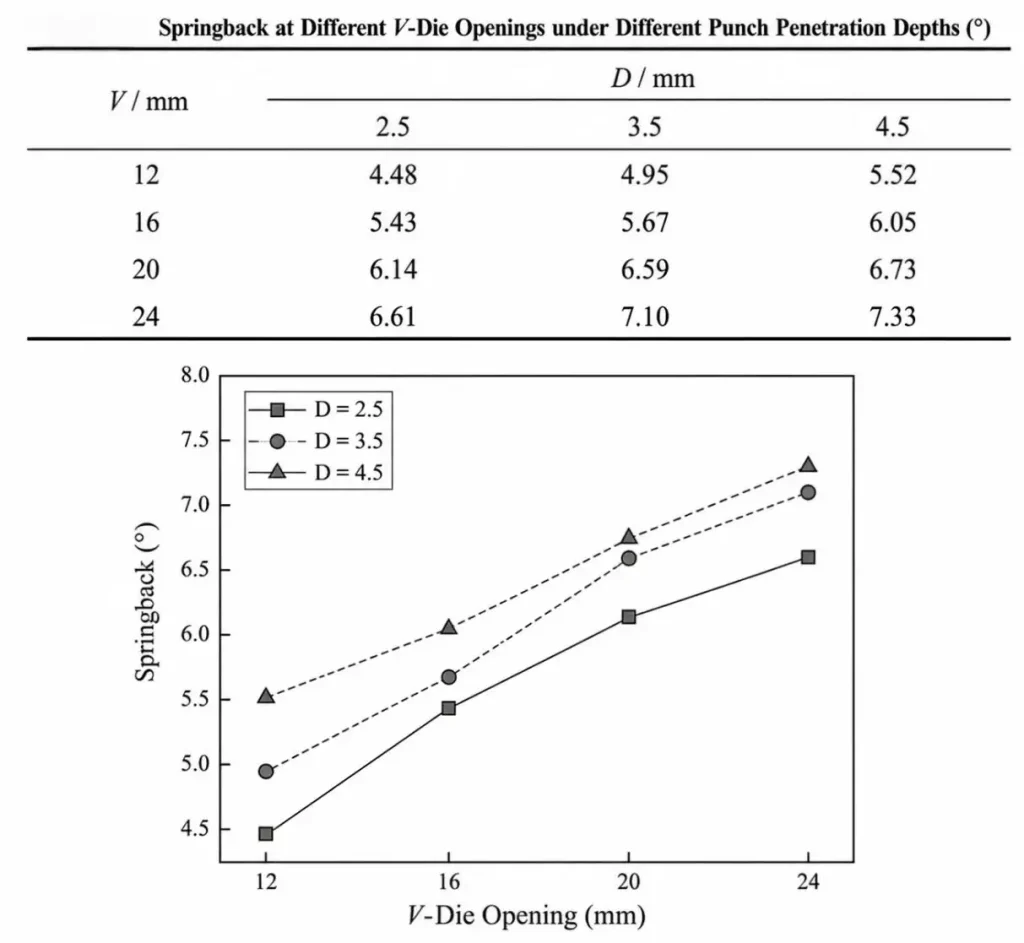
Figura 5: Illustrative Springback Trends for V-Die Opening and Punch Depth
V-die opening is an important tooling variable because it changes leverage, the naturally formed inside radius, Tonelagem necessária, minimum flange, and springback behavior.
In the supplied simulation case, a wider V opening was associated with greater springback. This direction should not be generalized without matching the stated material, Raio, Profundidade, and angle definition.
The supplied case showed a stronger response to V-die opening than to the other studied tooling radii. Em produção, V selection must also satisfy tonnage, inside-radius, flange-length, and tooling-capacity limits.
Portanto, when selecting a V-die, it is not sufficient to consider only whether the sheet can be successfully bent.
Changes in the V-die opening also affect the final bending angle and the required springback compensation value.
Raio de Punção
The upper punch radius also affects springback after air bending.
The original chart and text did not agree on the direction of the punch-radius trend. The chart has therefore been removed, while punch radius remains listed as a factor that must be validated for the actual setup.
Compared with V-die opening, punch radius often has a smaller effect in air bending, but it still influences surface contact, minimum radius, and the local strain state.
Portanto, the punch radius is one of the factors affecting springback, but it is not the only parameter that needs to be considered.
In practical bending operations, Espessura da folha, Propriedades do material, and V-die opening must also be considered together to achieve accurate bending results.
Die Shoulder Radius
The lower die radius also affects springback.
The supplied analysis reported greater springback as die-shoulder radius increased under its stated conditions.
No entanto, compared with the V-die opening width, the influence of the lower die radius on springback is relatively smaller.
Portanto, changes in the lower die radius can still affect the final springback behavior.
For workpieces requiring high angle accuracy, tooling geometry should be considered as part of the overall bending parameters.
Punch Penetration Depth
The upper punch penetration depth not only determines the forming condition in air bending but also affects the amount of springback.
The supplied analysis reported a change in springback as penetration increased, but production correction must be based on the unloaded angle and the controller's angle convention.
As punch penetration depth is increased in the hope of increasing bending deformation, springback must be taken into account.
Air bending therefore cannot guarantee the unloaded angle from punch position alone.
In actual bending operations, the process parameters must also consider material properties, Espessura da folha, tooling dimensions, and springback compensation.
Tabela 3. Summary of Factors Affecting Springback in Air Bending
What Affects Air Bending Accuracy?
Air-bending accuracy includes both the target angle and angle consistency across the full bend length.
For longer workpieces, the consistency of the bending angle along the entire bending length must also be considered.
The factors affecting air bending accuracy mainly come from two aspects:
One source of error is press brake deflection. Under load, the ram and bed can deflect, changing effective punch penetration across a long bend.
Springback and the final bending angle on a part are also influenced by tooling and the material. These include variations in tooling radius, Espessura da folha, and the opening of the V-die as well as the properties of the material.
Machine Deflection and Angle Consistency
When the press brake is subjected to bending loads, the ram and the worktable undergo a certain amount of deformation.
This deformation may cause the upper punch penetration depth to vary along the entire bending length.
When the penetration depth differs at different positions, the bending angle of the workpiece may also vary.
This occurs more frequently when we are automating longer workpieces.
Portanto, high-precision air bending involves the control of the angle at a specific position, as well as the control of the consistency of the bending angles throughout the entire length of the bending stroke.
Material and Tooling Variation
Air bending accuracy is impacted by the elastic modulus, Resistência ao escoamento, and strain-hardening behavior of the material as well as tooling variables.
Materials with the same nominal thickness can behave differently because their strength, modulus, temper, and rolling direction are not identical.
Thickness variations can also have a large effect on springback.
Além disso,, the design of the V-die, Largura da abertura, upper and lower die radii, can affect the level of springback.
Por isso, if there is a change in the specifications of the material or the variables of tooling, the parameters of bending are likely to produce a different final result.
How to Improve Accuracy in Press Brake Air Bending
Improving air-bending accuracy requires coordinated control of tooling selection, springback correction, material variation, ram repeatability, and machine deflection.
Tooling selection helps to minimize the unpredictability of the bending results.
Spring back compensation helps to achieve the desired target angle.
Deflection along the length of the bending tooling also needs to be accounted for.
Select the Right Tooling and V-Die Opening
V-die opening is a major setup variable, but it should be selected from the required radius, minimum flange, tonelagem, tool capacity, and material—not from springback alone. Use o press brake tooling selection guide to compare punch and V-die choices. The common V = 8 x thickness relationship is only a starting point for many mild-steel jobs.
Other tooling parameters include the upper punch radius and the lower die radius.
Selection of tooling needs consideration of the material thickness and bending requirements.
Compensate for Springback
Springback occurs after unloading, so the programmed depth should be corrected from the measured unloaded angle.
To compensate for an angle that opens after unloading, increase penetration in controlled increments to form a slightly more acute loaded angle, then measure again.
With adequate compensation value on springback, the final angle after springback may be brought closer to the target angle.
Correct springback compensation may also reduce multiple iterations of trial bending and minimize losses due to scrap from unacceptable bending angles.
Use Crowning to Improve Angle Consistency
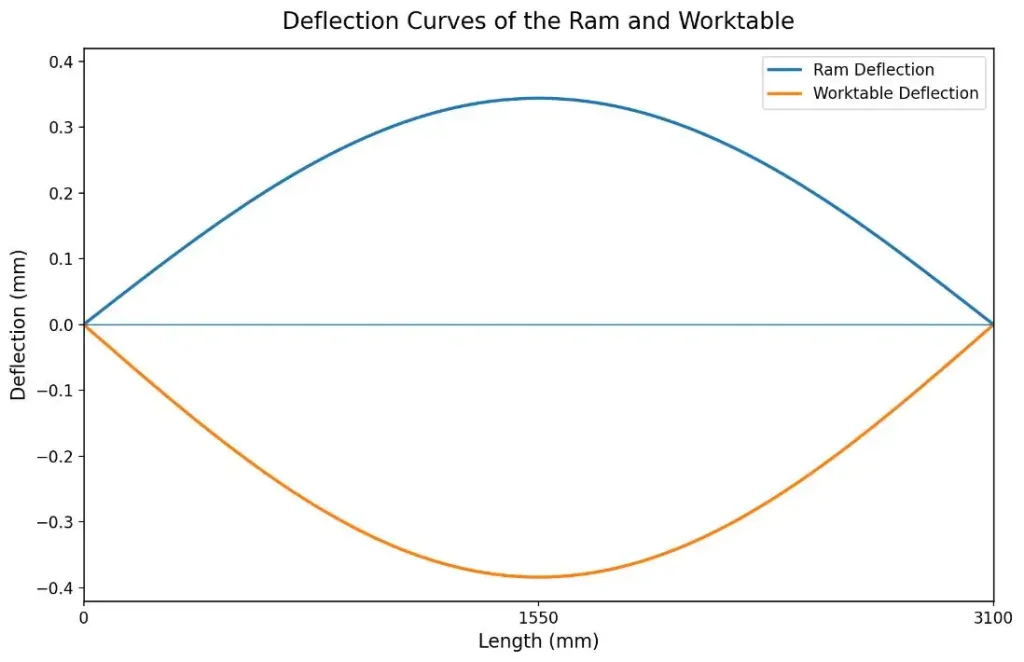
Figura 6: Illustrative Deflection Curves of the Ram and Worktable
On long workpieces, deflection of the ram and worktable can produce different angles at the center and ends of the bend.
A deflection compensation system can compensate for this deformation.
After compensation, the relative position between the upper and lower tooling can remain more stable, thereby improving bending angle consistency across the full length of the workpiece.
Portanto, for long workpieces and high-precision bending applications, Coroação do freio de pressão is one of the main methods for improving angle consistency across the bend length.
Advantages and Limitations of Air Bending
| Vantagens | Limitações |
| Lower forming force than bottoming or coining | More sensitive to springback and material variation |
| Multiple bend angles with one suitable tooling set | Final angle depends on precise ram-depth control |
| Faster setup for mixed-angle or small-batch work | Inside radius is influenced by V-die opening and material |
| Well suited to CNC programming and automatic angle correction | Long bends may require crowning for consistent angles |
Conclusão
Air bending is a flexible press brake process in which punch penetration controls a range of loaded angles while the sheet remains clear of the bottom of the V-die. It normally requires less force than bottoming or coining.
Its accuracy depends on material consistency, V opening, tooling radii, ram positioning, springback correction, and deflection control. These variables can be managed through documented setups, Teste de curvas, Medição, e coroação.
When the material and tooling are identified and the unloaded result is measured, air bending offers an effective balance of flexibility, Throughput, e repetibilidade.
Need a Press Brake for Air Bending?
Press brake selection should reflect bend length, Resistência do material, Espessura da folha, V opening, Tonelagem necessária, Geometria das peças, tolerance, Volume de produção, and automation needs.
For long workpieces or high-precision bending, stable ram control and deflection compensation can ensure consistency of bending angle across the entire length of the workpiece.
Different combinations of material, espessura, Comprimento da curva, ângulo, and part geometry require different press brake configurations.
You can provide the following preliminary information:
• Material type
• Sheet thickness
• Bending length
• Availability of workpiece drawings (if any)
JS RAGOS can assist you with the selection of a press brake based on the provided information.
Explore: JS RAGOS Press Brakes
Planning a specific part? Contact JS RAGOS for a bending solution
Perguntas Frequentes
Q1: What Is Air Bending on a Press Brake?
Dobra de ar, or V-type free bending, is one of the most common press brake sheet metal bending methods.
During air bending, the sheet metal is positioned over a V-shaped lower die, and the upper punch moves toward the die and presses the sheet into the V-shaped opening. Durante esse processo, the sheet does not need to come into contact with the bottom of the lower die.
Different angles are achieved with different penetration depths of the upper punch. Portanto, the same tooling can be used to modify workpieces containing different bending angles.
Q2: What Is the Difference Between Air Bending and Bottom Bending?
The main difference between air bending and bottom bending is the contact condition between the sheet metal and the tooling.
Na dobra de ar, the bending angle is controlled by the depth of penetration of the upper punch, while the contact between the sheet and the lower die is not complete.
Na flexão inferior, the contact between the sheet metal and the tooling is complete, and the final bending angle is determined by the die angle.
Air bending uses less bending force and has more angle flexibility, contudo, the springback amount is relatively greater.
Bottom bending uses greater bending force, but the springback amount is relatively low.
Q3: Why Does Air Bending Require Less Tonnage?
Na dobra de ar, the sheet contacts the punch and the two V-die shoulders but does not contact the bottom of the die.
Because the sheet is not forced into full tooling contact, air bending normally requires less forming force than bottoming or coining.
Bottom bending calls for complete contact between the sheet metal and the tooling, requiring more force be applied for bending.
Q4: What Causes Springback in Air Bending?
Durante o processo de flexão, plastic and elastic deformations occur in the sheet metal.
After the bending process, the upper punch moves upwards, lifting the load from the sheet, e, in the process, part of the elastic deformation recovers.
Plastic deformation remains, while the elastic portion recovers and opens the included bend angle.
This phenomenon is referred to as springback.
Q5: How Does V-Die Opening Affect Air Bending?
V-die opening influences springback together with material, espessura, punch depth, radii, and angle definition.
In the supplied simulation case, springback increased as the V-die opening increased; treat this as a case-specific trend until the source and conditions are confirmed.
Of the tooling geometry parameters studied, the V-die opening has the greatest influence on springback, e, portanto,, while selecting a V-die, factors like the thickness of the sheet, the properties of the material and the required bending angle have to be evaluated.
A V-die opening of the correct size can enable better repeatability and reliability in bending.
Q6: How Can You Improve Bend Angle Accuracy?
For better control of bend angle accuracy, tooling and V-die opening should be selected based on the material and the requirements of bending. The selected V-die opening should ensure that the requirements are met. Better tooling and appropriate selection of V-die opening will improve repeatability and reliability in bending.
Segundo, compensate for springback by increasing punch penetration in controlled increments to form a slightly more acute loaded angle, then measure the unloaded part.
For longer workpieces, the press brake ram and worktable will also have some amount of deformation that should be accounted for. A crowning (deflection compensation) system will help provide bends that are consistent along the entire length of the bend.
In conclusion, proper selection of tools, Retorno de material, and upper punch penetration all help achieve air bending accuracy.